2026 Top Low Sofa Types for Global Buyers
Low Sofa designs are attracting global buyers who want relaxed seating, cleaner room lines, and flexible layouts. Yet a low silhouette is not automatically comfortable. Seat height, cushion depth, back support, and frame construction matter just as much as appearance. A sofa that suits a spacious showroom may feel awkward in a compact apartment. Small details count.
Charles Eames, the influential furniture designer, once said, “The details are not the details. They make the design.” That idea is useful when comparing Low Sofa types. Buyers can examine modular models, compact two-seaters, deep lounge sofas, and low-profile sectionals. Each answers a different need. A deep seat invites sprawling, while a firmer, higher cushion can make standing easier. Measure the room, doorways, and intended walking paths before choosing. It sounds obvious. It is often missed.
This guide explores practical differences among popular Low Sofa styles for international buyers, including comfort, materials, room fit, and everyday care. It also considers how climate, household habits, and shipping dimensions can affect a purchase. Product descriptions do not always reveal how a sofa feels after hours of use. That uncertainty deserves attention. Even a carefully chosen model may not suit every body or home, and online photos can make proportions difficult to judge. Use the comparisons as a starting point, then verify dimensions and construction with the seller. Good design should look inviting. It should also work on an ordinary Tuesday.
Low Sofas: Definition, Seat Height, and Key Design Features
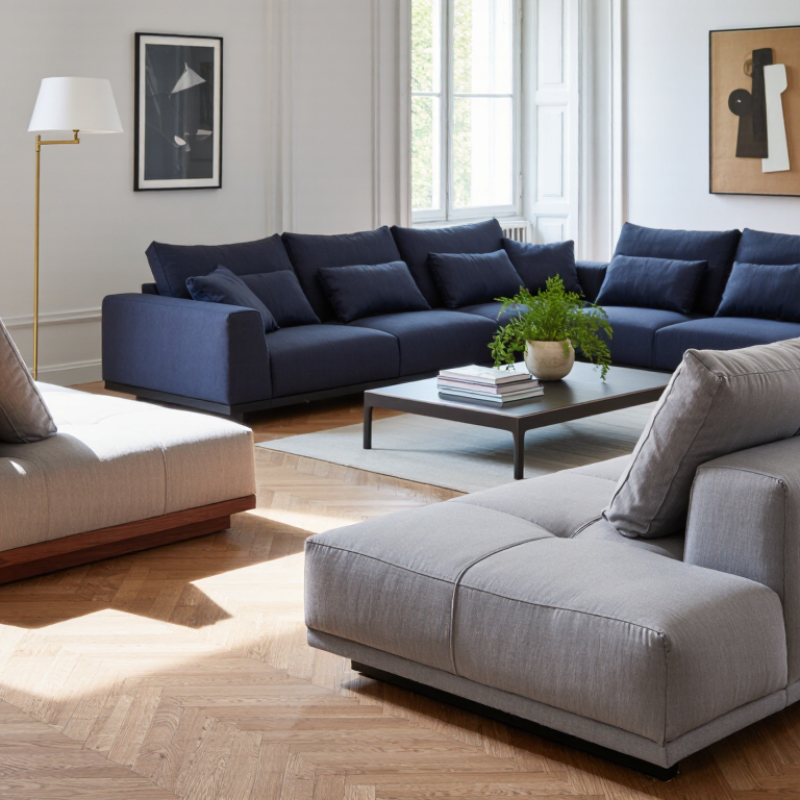
A low sofa sits closer to the floor than a conventional sofa, creating a relaxed, grounded look. Its seat height often falls between 14 and 17 inches, measured from the floor to the top of the seat cushion. These figures are general, not a fixed standard. Cushion thickness and firmness can change the usable sitting height. Small details matter.
Low profiles often pair with deep seats, broad cushions, and low backrests. A firm frame helps the sofa feel stable, while supportive foam or springs can reduce the sensation of sinking too far. Slim legs may lift the frame slightly; a plinth base keeps it visually close to the floor. Check the clearance beneath the sofa if you use a robot vacuum or need easier floor cleaning.
For everyday use, compare seat depth with the way people sit in your home. A deep seat can feel comfortable when lounging, but may be awkward for shorter users without extra cushions. Try measuring your current chair’s seat height and depth before choosing. Product dimensions are useful, though they cannot fully show how a cushion feels after months of use. That uncertainty is worth remembering.
Major Low Sofa Types by Frame and Seating Configuration
Low sofas differ not only in appearance, but also in how their frames support daily use. Solid hardwood frames can feel stable and resist movement when joints are well fitted. Engineered wood may reduce weight and cost, though edge quality and fasteners deserve close inspection. Metal frames offer a slim profile, but poorly placed supports can create pressure points beneath the seat. Check the joints. A low frame should feel firm, not rigid.
Frame height affects practical details. A platform base keeps the silhouette close to the floor and can suit compact rooms. Yet dust gathers underneath, and robotic cleaners may not fit. Raised legs offer easier access for cleaning, even if they make the sofa look less grounded. Buyers should check floor clearance and frame weight before ordering; shipping dimensions alone do not reveal how easy a sofa is to move through a doorway.
Seating configuration shapes how people share the sofa. A two-seat design suits smaller spaces, while a three-seat model gives guests more room without adding separate chairs. Modular sections can be rearranged, but connectors must hold aligned under regular use. A chaise adds room to stretch out, though it can limit flexible placement. Low seats may also feel difficult to rise from for some users. The lowest profile is not always the most comfortable choice, and I would question any specification that gives seat height without cushion compression.
2026 Top Low Sofa Types for Global Buyers
Major low sofa types by frame and seating configuration
Bars show the upper end of typical seating capacity for each configuration. Capacity varies with sofa dimensions and design; frame materials such as hardwood, engineered wood, and metal can be used across multiple configurations. This is a product-type comparison, not market-share data.
How Materials and Cushioning Affect Comfort and Durability
Low Sofa Comfort Starts Beneath the Fabric
A low sofa puts more pressure on cushions during sitting and standing, so foam quality matters. Density describes how much material is packed into the foam; firmness describes how strongly it resists compression. They are not interchangeable. For a compact lounge seat, ask for both figures, plus the foam’s test method. ISO 3385:2014 assesses flexible foam fatigue through repeated pounding, including an 80,000-cycle test. That result helps compare samples, but it does not predict every home’s lifespan.
Small detail.
Layered cushions can balance support and softness. A resilient foam core helps limit sagging, while a softer top layer eases pressure beneath the thighs. Too-soft foam may feel inviting in a showroom, then compress unevenly with daily use. Natural latex, polyester fiber, and feather blends feel different and need different upkeep. Fabric also matters: tight weaves can resist abrasion, while loose textures may snag more readily. ANSI/BIFMA X5.4-2020 provides durability testing for public and lounge seating; request the actual test results, not just a claim of “heavy-duty” construction. Frame joints, webbing tension, and cushion covers all affect service life. A test score cannot capture every comfort preference.
That part is personal, and sometimes inconvenient.
Matching Low Sofa Types to Room Layouts and Buyer Needs
A low sofa should fit the room’s circulation, not just its floor plan. In a narrow apartment, a compact two-seater with slim arms leaves more space for walking. For open-plan rooms, a low modular sofa can define the lounge area without blocking sightlines. NAHB’s analysis of U.S. Census Bureau data reports an average new single-family home size of 2,411 square feet in 2023. That is a useful U.S. reference, not a global rule; buyers should measure their actual rooms.
Room use matters, too. A deep, low lounge sofa suits relaxed family spaces, but may be awkward for people who prefer firm support or need easier standing. Check seat height and depth in person where possible. For smaller rooms, a low-back design can keep windows and wall art visible. Still, a very low profile may feel less supportive during long conversations. Looks can mislead.
Tips: Measure doorways, lift access, and the sofa’s full footprint before ordering. Mark its outline with tape. Leave clear paths around corners and tables. One detail buyers sometimes overlook is delivery access; an ideal layout is no help if the sofa cannot reach the room.
2026 Buying Criteria for Global Low Sofa Buyers
For global buyers, the best low sofa is not simply the lowest one. Measure seat height, depth, and back support in person when possible; low seats can feel tiring when standing up. Check the sofa with cushions compressed, not just in showroom photos. A tape measure helps. Also compare the full package dimensions with doorways, lifts, and room layouts. Ask whether legs detach, covers can be removed, and spare parts are available. These details matter more when a sofa travels far.
Material claims deserve a closer look. PwC’s 2024 Voice of the Consumer Survey, covering 31 countries, found respondents were willing to pay an average 9.7% more for sustainably produced or sourced goods. That is stated willingness, not proof of purchase. Still, it gives buyers reason to request clear material and care information. The U.S. EPA’s 2018 Advancing Sustainable Materials Management report recorded 12.1 million tons of furniture and furnishings waste. Repairable frames and replaceable covers may help extend a sofa’s useful life. I would not judge durability by fabric swatches alone. Ask for frame construction details and test the seat for sagging and noise. It is easy to overlook.