The Raymond Compressed Sofa is attracting global buyers seeking lower freight volume, faster warehouse handling, and simpler delivery into apartments. Its vacuum-packed form can reduce carton space dramatically. Yet compression is not automatically proof of quality. Foam recovery, frame strength, fabric performance, and packaging control still decide customer satisfaction.
Recent industry reports support this growing opportunity. Grand View Research’s 2024 furniture market analysis identifies e-commerce, space-saving design, and international distribution as important furniture growth drivers. IMARC Group also highlights rising demand for modular and multifunctional furniture in urban households. These trends create room for compressed sofas, especially where elevators, narrow corridors, and expensive last-mile delivery shape purchasing decisions.
Packaging is part of the product, not an afterthought.
Furniture sourcing consultant Martin Daum describes this principle clearly: “A compressed sofa succeeds only when its packaging protects the experience after opening.” Buyers should treat that statement as a practical warning, not a slogan. A supplier may show a beautiful showroom sample, yet the delivered unit may recover unevenly after forty-eight hours. That gap matters.
This guide reviews seven Raymond Compressed Sofa suppliers for global buyers. It considers factory experience, compression technology, foam density, fabric options, export documentation, production consistency, and after-sales support. Some suppliers may offer attractive pricing but limited customization. Others may provide stronger testing while requiring larger minimum orders. The comparison is not perfect. Public supplier data can be incomplete, and claims still require verification through samples, factory audits, and independent testing. For serious buyers, the best supplier is not always the cheapest. It is the one that delivers consistent sofas after the packaging disappears.
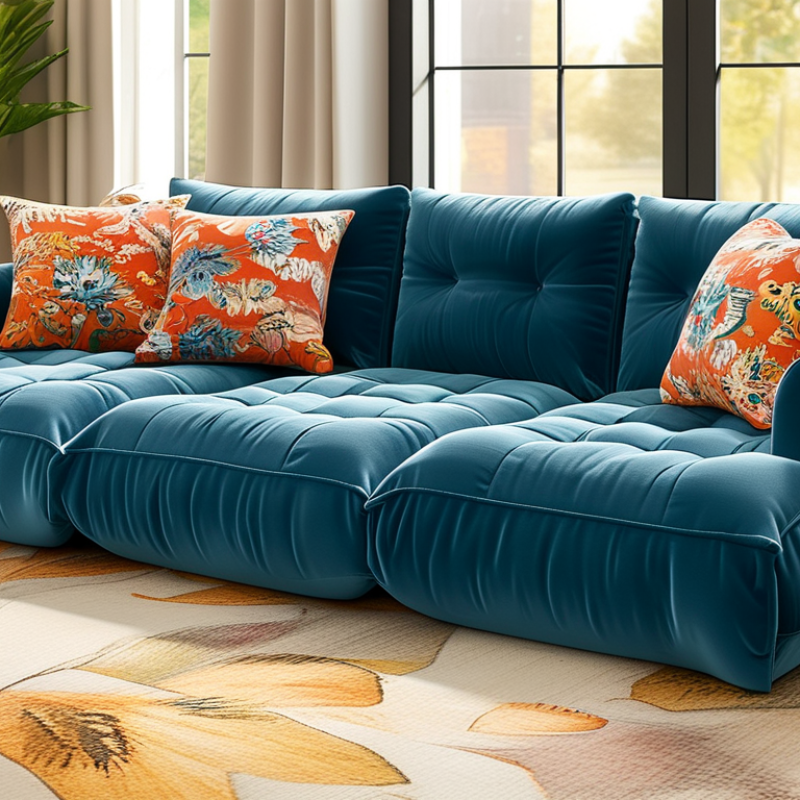
Compressed sofas are upholstered seating products packed under controlled compression, often with vacuum film, flexible foam, or modular frames.
Their cartons look surprisingly small beside a warehouse pallet. After unpacking, the cushions recover gradually and become usable within hours or several days.
Global buyers choose them mainly for logistics. Smaller packages can improve container utilization, reduce storage pressure, and simplify delivery through narrow doors or staircases.
The World Bank’s Logistics Performance Index 2023 emphasizes reliability, tracking, and timely delivery as major supply-chain factors. These sofas support all three, but only when packaging is tested properly.
Grand View Research reported that the global furniture market reached about USD 516.6 billion in 2022, showing strong room for scalable, delivery-friendly furniture formats. That figure does not prove compressed sofas will win. Consumer comfort still decides repeat purchases.
Tips: Ask suppliers for compression-cycle tests, carton dimensions, foam-density reports, and recovery photographs taken after 24, 72, and 168 hours. Check fabric abrasion results and frame-load testing.
A low shipping quote can become expensive if cushions remain uneven or packaging fails in humid ports. Request a pre-shipment sample. Small details matter.
In practice, buyers should compare landed cost, not factory price alone. Include freight, inspection, import handling, replacement parts, and customer-service response time.
Some suppliers advertise impressive space savings, yet provide limited recovery evidence. That gap deserves attention. The better choice is usually the supplier with transparent testing, stable materials, and realistic recovery claims.
Key Criteria for Evaluating Raymond Compressed Sofa Suppliers
Global furniture demand is expanding. Grand View Research valued the furniture market at USD 516.66 billion in 2022, with projected growth through 2030. This scale increases supplier choice, but also increases quality risks. Buyers should verify factory experience, production capacity, and export history. Request dated invoices, loading photos, and references from comparable markets. A polished website proves little.
Compressed sofas need careful technical checks. Evaluate foam density, rebound performance, frame moisture, fabric abrasion, and compression recovery after unpacking. ASTM furniture testing guidance commonly examines durability, stability, and load performance. Ask for laboratory reports, not verbal promises. Packaging also matters. Measure carton strength, corner protection, moisture barriers, and cubic-volume efficiency. A supplier saving 15% in freight may create higher replacement costs later.
Compliance documents should match the destination country. Check material declarations, fire-safety requirements, labeling, and restricted-substance controls. ISO 9001 certification can support process consistency, but it does not guarantee every shipment. Require a pre-shipment inspection and retain approved samples. I would also test one sofa after seven days of expansion. Real performance can differ from factory samples. Even experienced buyers miss small zipper defects or uneven foam recovery. A transparent supplier explains weaknesses, accepts corrective actions, and provides a measurable production schedule.
This procurement benchmark allocates a 100-point evaluation model across the most important factors for global compressed-sofa sourcing. Product quality, compression performance, export compliance, logistics reliability, and after-sales support should be assessed together rather than by price alone.
Global buyers need more than attractive upholstery. The seven leading supplier profiles include vacuum-packing specialists, modular-frame manufacturers, export-certified factories, custom-size producers, hotel-furniture suppliers, warehouse-ready consolidators, and small-batch workshops. Each profile serves a different purchasing need.
The global furniture market reached about USD 655.6 billion in 2023, according to IMARC Group’s 2024 industry report. Grand View Research also projects steady furniture-market growth through 2030. These figures support continued international demand, but demand alone does not prove supplier quality.
Buyers should compare foam density, rebound time, frame materials, seam strength, and packaging recovery after opening. A sofa may look compact in a warehouse. It can still arrive with permanent creases.
For Raymond compressed sofa orders, suppliers with documented export experience deserve closer attention. Check factory audits, moisture-control procedures, labeling accuracy, and delivery records.
UNCTAD’s e-commerce research highlights the importance of reliable cross-border fulfillment and clear product information. I would also request a paid sample before a large order. It adds cost. It prevents expensive assumptions.
Some suppliers publish impressive specifications, yet provide weak after-sales support. That gap deserves careful review.
When comparing compressed sofa suppliers, global buyers should inspect measurable quality, not showroom appearance. Ask for foam density, frame material, fabric abrasion results, and compression-recovery testing. A sofa that stays packed for weeks may need 48 hours to regain its shape. Sometimes, it never fully does. Request independent laboratory reports and production samples before placing a large order.
Pricing needs a landed-cost calculation. Include the sofa, vacuum packaging, freight, duties, inspection, and possible replacement parts. Grand View Research valued the global furniture market at about USD 516.66 billion in 2022, with projected growth through 2030. This competitive market encourages low quotations, but unusually cheap offers may hide thinner frames or weaker foam. Compare warranties, defect allowances, and payment terms beside the unit price.
Customization should be tested through a clear technical sheet. Specify dimensions, seat firmness, fabric composition, colors, logo placement, carton strength, and minimum order quantity. Suppliers should provide digital drawings and a pre-production sample. The 2024 World Furniture Outlook from CSIL highlights continued pressure on furniture supply chains, so lead-time promises deserve evidence. Ask for recent delivery records and factory capacity. I would also test one sofa myself before approving a full container. It costs more upfront. It can prevent an expensive mistake.
| Rank | Anonymous Supplier Profile | Primary Production Region | Compressed Sofa Format | Frame & Support Construction | Seat Cushion Specification | Standard Upholstery Options | Typical MOQ | Typical Lead Time | Indicative FOB Price per Unit |
Customization Capability | Packaging & Logistics | Quality-Control Strength | Best Buyer Fit | Comparison Score |
|---|---|---|---|---|---|---|---|---|---|---|---|---|---|---|
| 1 | Supplier Profile A | Eastern China | 2–3 seat vacuum-compressed sofa | Solid wood and plywood frame; webbing suspension; reinforced corner joints | High-resilience foam, approximately 35–40 kg/m³; removable seat covers | Polyester, linen-look fabric, chenille, and selected performance fabrics | 20 units per color or 50 units mixed | 25–35 days after sample approval | US$155–235 | Custom dimensions, fabric, leg finish, logo label, carton artwork, and seat firmness | Vacuum compression, moisture barrier, corner protection, and export carton | Pre-production sample, frame inspection, foam-density check, and final AQL inspection available | Online retailers and private-label importers seeking balanced quality and price | 9.1/10 |
| 2 | Supplier Profile B | Southern China | Modular compressed sofa with detachable arms | Engineered wood frame; steel reinforcement in load-bearing areas; sinuous springs | 30–38 kg/m³ foam with optional feather-blend top layer | Woven polyester, boucle-style fabric, velvet, and stain-resistant textiles | 30 units per model | 30–40 days | US$180–285 | Modular layouts, armrest width, fabric color, piping, cushions, and packaging inserts | Individually compressed modules; stackable cartons; container-load optimization | Dimensional inspection, compression recovery test, seam inspection, and carton drop testing | Furniture brands that need flexible configurations for different room sizes | 8.9/10 |
| 3 | Supplier Profile C | Central China | Compact apartment sofa bed with compressed seat and back cushions | Metal sleeper mechanism with plywood base; reinforced side panels | 32–36 kg/m³ foam; foldable mattress section; medium-firm comfort profile | Polyester, faux linen, microfiber, and selected recycled-fiber fabrics | 50 units per model | 35–45 days | US$165–260 | Sleeping surface size, mechanism finish, fabric, mattress thickness, and remote-area packaging | Compressed cushions packed separately from the mechanism; reinforced five-layer cartons | Mechanism cycle testing, bed-load testing, foam recovery checks, and pre-shipment inspection | Hospitality projects, small apartments, and multifunctional furniture retailers | 8.7/10 |
| 4 | Supplier Profile D | North China | Oversized deep-seat compressed sofa | Hardwood and plywood combination frame; elastic webbing; additional center support | 35–42 kg/m³ high-resilience foam; optional low-profile seat topper | Chenille, corduroy, textured polyester, linen-blend, and washable covers | 20 units per design | 30–45 days | US$210–340 | Seat depth, sofa width, chaise orientation, cover construction, cushion fill, and leg style | High-density compression packaging with anti-abrasion film and moisture-resistant cartons | Load-bearing test, seam-strength inspection, fabric color review, and finished-product audit | Premium direct-to-consumer sellers and buyers prioritizing comfort and visual volume | 8.6/10 |
| 5 | Supplier Profile E | Western China | Value-oriented 2-seat and 3-seat compressed sofa | Plywood frame with solid-wood reinforcement; elastic webbing support | 28–34 kg/m³ foam; standard medium-firm seat construction | Basic polyester, linen-look, velvet, and selected stock colors | 100 units per color | 20–30 days for stock designs | US$115–185 | Limited customization of fabric, legs, labels, carton printing, and cushion dimensions | Standard vacuum compression; economical flat-pack cartons designed for container efficiency | Incoming-material checks, production-line inspection, and random final inspection | Budget-focused distributors and first-time importers testing market demand | 8.2/10 |
| 6 | Supplier Profile F | East Asia Export Cluster | Performance-fabric compressed sofa for frequent-use environments | Engineered wood frame; reinforced steel brackets; high-cycle webbing system | 36–40 kg/m³ foam; optional replaceable seat inserts | Stain-resistant polyester, water-repellent woven fabric, recycled-fiber fabric, and faux leather | 30 units per color | 35–50 days | US$195–315 | Performance-fabric testing, custom abrasion targets, removable covers, modular sizing, and labels | Individual compression bags, anti-mildew treatment on request, and export-grade cartons | Fabric abrasion review, colorfastness documentation, foam recovery test, and third-party inspection support | Rental housing, serviced apartments, family homes, and high-use commercial interiors | 8.5/10 |
| 7 | Supplier Profile G | South China | Contemporary modular lounge sofa with ottoman options | Mixed hardwood and plywood frame; webbing suspension; detachable modular connectors | 30–38 kg/m³ foam; optional fiber-filled back cushions and multiple firmness choices | Chenille, boucle-style, polyester, linen-blend, and selected vegan-leather materials | 25 units per configuration | 30–42 days | US$175–295 | Module count, chaise side, cushion fill, fabric, stitching, legs, carton design, and assembly guide | Each module compressed separately; barcode labels and mixed-container packing available | Connector-strength test, dimensional control, upholstery inspection, and final random inspection | Design-led retailers and buyers offering multiple sofa combinations online | 8.4/10 |
Note: Prices, minimum order quantities, lead times, and specifications are indicative industry comparison ranges for compressed sofa sourcing. Final commercial terms depend on dimensions, materials, order volume, inspection requirements, shipping method, and destination market regulations.
Global buyers should inspect compressed sofa suppliers beyond attractive catalog photos. Ask for a current factory video, production address, and clear export experience. A reliable supplier should explain foam density, frame materials, fabric composition, and compression limits in practical terms. Request a physical sample before approving a large order. Photos can hide uneven seams, weak zippers, or slow foam recovery.
Check every measurement after unpacking. Record seat height, cushion thickness, carton size, and recovery time within 24, 48, and 72 hours. The supplier should provide packaging drawings and loading estimates for your target container. Small errors matter. A sofa that gains extra volume may reduce shipping efficiency. Confirm minimum order quantities, production capacity, lead times, spare-cover availability, and inspection procedures in writing. Ask whether colorfastness, seam strength, and foam performance are tested by an independent laboratory.
Commercial terms also deserve careful attention. Match the invoice, product specification, payment schedule, and shipping documents before production starts. Define acceptable defects with photos and measurable limits. A pre-shipment inspection can check carton labels, dimensions, fabric shade, and packed quantities. Do not rely only on a polished sample. Samples may receive better finishing than bulk units. That risk is real. Keep one approved sample and a signed specification for comparison. Supplier communication should remain responsive when questions become technical, not merely promotional. A dependable partner admits limitations, reports delays early, and offers workable corrections instead of vague promises.