
Leave Your Message

10 Traditional Sofa Buying Tips for Global Buyers

A Traditional Sofa can anchor a room for years, but buying across borders adds practical questions. Will its frame fit through the doorway? Can the upholstery handle daily use, pets, or strong sunlight? Global buyers also need clear specifications for dimensions, materials, construction, finish, and delivery.

Grand View Research estimated the global furniture market at USD 736.6 billion in 2023 and projected 5.0% annual growth from 2024 to 2030. This figure covers furniture broadly, not sofas alone. It nevertheless shows why careful product comparisons matter in a large, competitive market. A low purchase price may not reflect freight, packaging, assembly needs, or the cost of replacing unsuitable upholstery.

Interior designer Nate Berkus has said, “Your home should tell the story of who you are, and be a collection of what you love.” That idea applies to a Traditional Sofa, too—but style alone is not enough. Ask suppliers for frame details, fabric composition, cushion construction, care instructions, and exact packed dimensions. Request photos of seams, legs, and finish samples; small differences can change the look in a real room. Then compare lead times and written warranty terms before placing an order. Even experienced buyers can overlook one detail. These ten buying tips help global buyers assess comfort, craftsmanship, logistics, and value with clearer eyes.
10 Traditional Sofa Buying Tips for Global Buyers

Understanding Traditional Sofa Styles and Their Defining Features

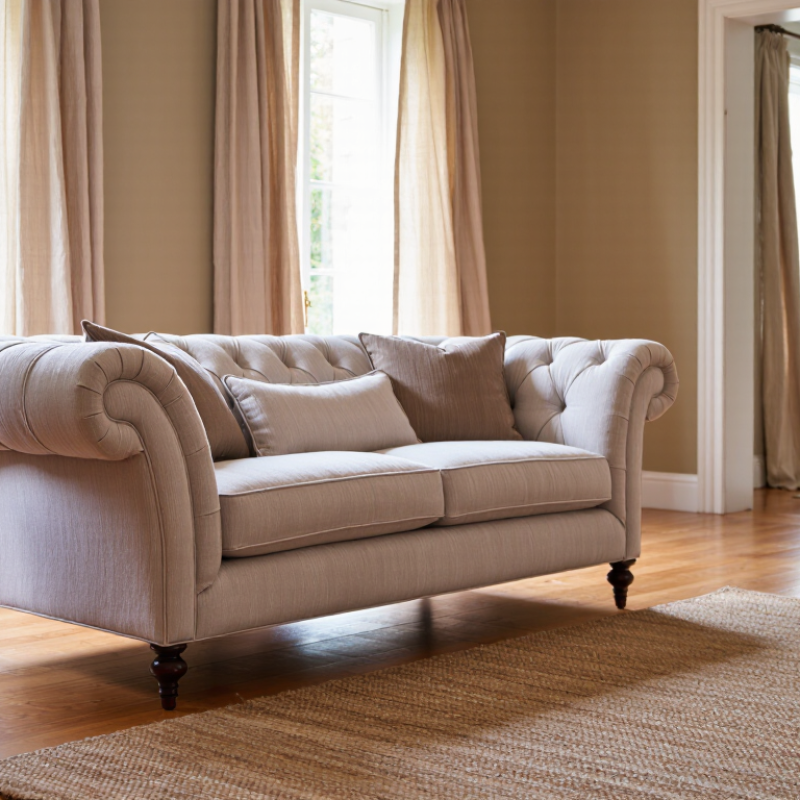
Traditional sofas are defined by recognizable shapes, tailored upholstery, and visible craftsmanship, not by age alone. A Chesterfield typically has deep button tufting, rolled arms level with the back, and a substantial profile. A camelback sofa has a raised center ridge that slopes toward lower ends. Its curved outline is easy to spot across a room. Queen Anne styles often feature a curved back, exposed wood legs, and restrained carved details. The exact proportions vary by maker and region.

Look closely at how each feature affects daily use. Deep tufting creates texture, but buttons can make cleaning less convenient. Rolled arms offer a place to rest an arm, though they take up more visual space. A high, firm back may suit formal rooms; a softer, lower seat can feel more relaxed. Small details matter. Check that carved trim feels smooth and that seams follow the sofa’s contours. Even experienced buyers can focus too much on appearance and overlook seat depth. Compare the sofa with your room measurements, then sit on it for several minutes; a beautiful silhouette is not automatically comfortable.

Measuring Your Space and Choosing the Right Sofa Size

Measure the room before browsing sofa dimensions. Record the wall length, doorway width, ceiling height, and the route from the entrance. Include hallway turns, stairs, and lift interiors; a sofa that fits the living room may still fail at the front door. Measure twice. Mark the proposed footprint on the floor with painter’s tape, then walk around it. A taped outline makes blocked paths and crowded corners obvious. Small gaps matter.

Size choices also reflect changing homes. The National Association of Home Builders’ 2024 analysis of U.S. Census data reported a median new single-family home size of 2,286 square feet in 2023, down from 2,299 in 2022. That U.S. figure is not a global rule, but it shows why room-by-room measurements matter more than assumptions about “standard” living rooms. Aim to preserve a clear everyday route, and check whether the sofa’s full depth leaves space for a coffee table. I still see people focus on width and overlook depth. Compare the sofa’s overall measurements with its packed dimensions, too; removable legs can help, but only if the entrance route allows them. A floor plan can mislead.

Evaluating Frames, Cushions, Upholstery, and Craftsmanship

10 Traditional Sofa Buying Tips for Global Buyers

Evaluating Frames, Cushions, Upholstery, and Craftsmanship

A traditional sofa should feel steady before it looks impressive. Press each front corner gently; rocking can signal an uneven frame or weak joints. Ask whether the frame uses kiln-dried hardwood, engineered wood, or a mix. These materials behave differently as humidity changes. The USDA Forest Products Laboratory’s Wood Handbook explains how moisture affects wood movement, a useful reminder for buyers shipping furniture across climates. Check the underside, too. Visible, tidy joinery is easier to assess than a frame hidden behind fabric.

Cushions need more than a quick sit. Sit near the edge, then stand and watch how quickly the seat recovers. Ask for the foam density and cushion construction, such as foam wrapped in fiber or down. Softer is not always better. A very plush seat may feel inviting in a showroom but offer less support over time. Grand View Research estimated the global furniture market at USD 677.09 billion in 2024. That broad market figure signals scale, not a guarantee of quality.

For upholstery, compare fiber content, cleaning guidance, and abrasion-test results using the same test method. A high rub count alone cannot predict comfort, fading, or seam strength. Look closely at piping, pattern alignment, and corners; small flaws often show there first. Ask for a fabric sample. View it in daylight and under warm lamps. One trade-off remains: durable fabric may feel less soft. And craftsmanship varies, even within one production run. Don’t overlook that.

Checking Fabric Suitability, Care Needs, and Local Standards

Traditional sofa fabric should match the room’s climate and daily use. In humid homes, tightly woven, quick-drying fabrics can be easier to maintain than heavy textiles that hold moisture. For sunny rooms, ask for lightfastness results; a swatch beside a window can reveal fading risks. The U.S. EPA’s 2018 Advancing Sustainable Materials Management report estimated that 17 million tons of textiles were generated in the United States, with 11.3 million tons landfilled. Those figures cover all textiles, not sofas, but they underline why long service life and practical care matter.

Tips: Request the fabric composition, cleaning instructions, and test reports before ordering. Check whether the care code suits your household: a “dry-clean only” cover may be inconvenient around children or pets. Small labels matter. Test a spare swatch with a little water only if the supplier’s instructions allow it; careless spot-cleaning can leave rings or damage a finish.

Standards differ across markets, so confirm the destination country’s requirements for upholstery fire performance, chemical disclosures, and product labeling with your importer or a qualified testing laboratory. Do not assume one test certificate applies everywhere. Ask which test method was used, when the sample was tested, and whether it represents the exact fabric being supplied. I would treat unusually broad durability claims cautiously: abrasion figures are useful comparisons, but they cannot predict every household’s wear, cleaning habits, or sunlight exposure.

10 Traditional Sofa Buying Tips for Global Buyers: Fabric Suitability, Care Needs & Local Standards

Use Martindale abrasion results as one comparison point when choosing upholstery: higher cycle counts generally indicate greater resistance to surface wear. These are indicative buying benchmarks, not universal legal requirements or guarantees of fabric lifespan. Check care labels, cleaning instructions, and the fire-safety and labeling rules that apply in your destination market.

Comparing Prices, Shipping Options, Warranties, and After-Sales Support

A traditional sofa quote can hide major differences in timber, upholstery, cushion filling, and hand-finishing. Compare the same specifications, not just the headline price. Ask whether the quoted amount includes protective packaging, export documents, and delivery to your address. Small differences matter. A carved leg or custom fabric may also change production time and cost.

For international shipping, request a written estimate that separates freight, insurance, and any destination charges. Confirm whether delivery means curbside drop-off or placement inside your home. Measure doorways, stairwells, and lift interiors before ordering; a sofa that fits the room may not fit the route. Do not assume tracking includes help with customs paperwork. Delivery can be slow.

Read the warranty for its exact coverage period and exclusions, especially for frames, springs, fabric, and cushions. Confirm who pays for inspection, replacement parts, and return shipping if a problem occurs abroad. Ask how after-sales support works across time zones, and whether advice or repairs are available locally. Keep photos of the sofa and packaging when it arrives. One detail buyers sometimes miss: a long warranty is less useful if arranging service is difficult.