China Best Compressed Foam Sofa Manufacturers Guide
Choosing a reliable Compressed Foam Sofa manufacturer requires more than comparing product photos or factory prices. This guide examines foam density, recovery time, fabric strength, packaging methods, and production consistency. These details affect comfort after unpacking. They also influence returns, shipping damage, and long-term customer trust.
Elena Morris, a foam materials consultant with experience in furniture packaging, explains, “Compression saves space, but quality depends on how the foam recovers.” That principle matters. A sofa may arrive in a compact carton, then slowly regain its intended shape. Buyers should request recovery test records, foam specifications, seam photographs, and packaging samples before placing large orders. A factory visit can reveal practical details. Check cutting accuracy. Press the cushions. Inspect carton corners. Small observations often expose larger process weaknesses.
This China Best Compressed Foam Sofa Manufacturers Guide focuses on suppliers that balance engineering, comfort, customization, and dependable communication. It considers vacuum compression, roll packing, modular construction, removable covers, and private-label support. Certifications can strengthen confidence, but certificates alone do not prove everyday quality. Production samples still matter. So does honest discussion about limitations.
Some manufacturers promise rapid recovery and permanent shape retention. Those claims deserve careful testing. Foam behavior changes with climate, storage duration, user weight, and fabric tension. The industry is improving, but it is not flawless. A thoughtful buyer should compare evidence, not slogans. The best supplier is not always the cheapest. It is the one that documents performance clearly and accepts reasonable scrutiny.
What Is Compressed Foam and Why Is It Used in Sofas?
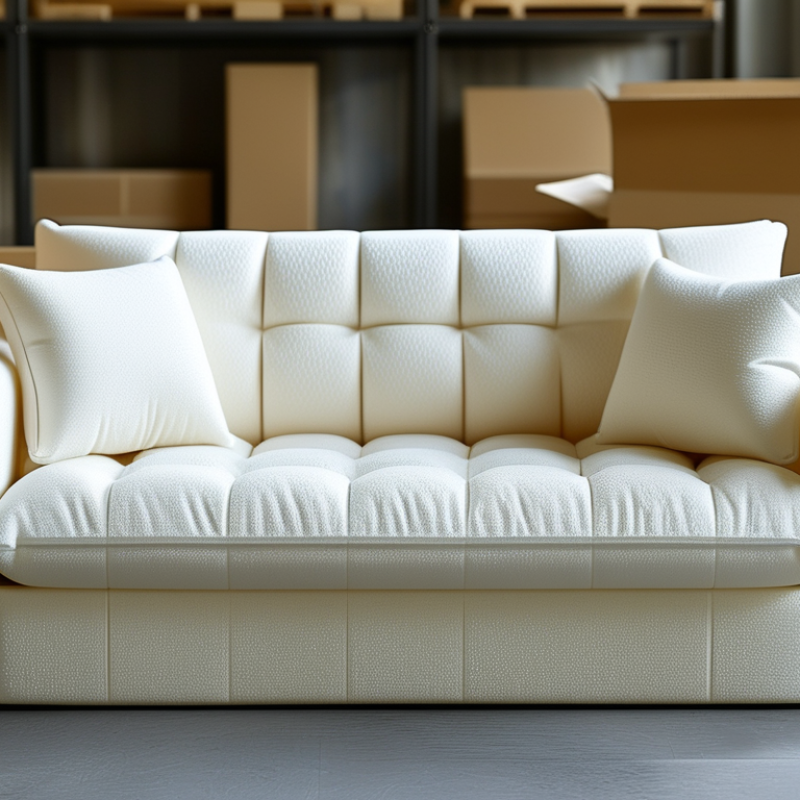
Compressed foam is usually polyurethane foam packed under strong pressure, not a completely different material. Manufacturers remove much of its air volume before wrapping it tightly. This process makes bulky sofa cushions easier to ship and store. When unpacked, the foam gradually regains its intended shape. I have seen cushions expand within hours, although some need two or three days.
Foam selection still matters more than compression. High-resilience foam usually offers better bounce and repeated-use performance. Density affects durability, while firmness controls the sitting feel. A dense cushion can resist early sagging, but it may feel too hard for relaxed seating. Lower-density foam feels softer and costs less, yet it can lose support sooner. These differences should be checked with technical data, not appearance alone.
Expansion is not always perfectly even. Corners may remain folded, and a faint manufacturing odor can linger briefly. Leave the cushions in a ventilated room, then check their height and edges.
A practical test is simple: sit in the same place repeatedly and observe recovery after several minutes. Covers should fit without pulling, but they should not squeeze the foam.
Compression saves logistics space, but it can add setup time and quality-control risks. That trade-off deserves honest attention.
Key Quality Standards for Compressed Foam Sofa Manufacturing
China Best Compressed Foam Sofa Manufacturers Guide
Compressed foam sofa quality begins with measurable material performance. Suppliers should record foam density, indentation force deflection, tensile strength, and compression set for every production batch. ASTM D3574 provides recognized test methods for these properties. ISO 3385 also evaluates fatigue through an 80,000-cycle pounding procedure. After testing, cushions should recover evenly, without ridges or permanent valleys. A 48-hour recovery check is useful, although some factories may need longer for dense foam.
Packaging creates another quality risk. Vacuum compression can reduce shipping volume, but excessive pressure may damage foam cells. Inspectors should measure cushion thickness before compression and again after unpacking. The recovery curve matters. Not only the final size. Adhesive coverage should remain flexible, with no hard spots under the fabric. In practice, a sofa can pass a laboratory test and still feel uneven. This is where hands-on sampling helps.
Indoor emissions deserve equal attention. The U.S. Environmental Protection Agency reports that indoor pollutant concentrations can be two to five times higher than outdoor levels. Manufacturers should therefore request VOC and formaldehyde test records for foam, adhesives, and coverings. Testing against recognized chemical requirements, including applicable REACH limits, improves traceability. Batch codes, test dates, and laboratory accreditation should appear on inspection documents. Small omissions remain common. They deserve review.
How to Evaluate China-Based Compressed Foam Sofa Manufacturers
How to Evaluate China-Based Compressed Foam Sofa Manufacturers
Evaluating a compressed foam sofa manufacturer requires more than comparing online prices. Ask for the factory address, production photos, and a live video inspection. Check whether foam cutting, sewing, compression, and packing happen under controlled conditions. A reliable supplier should explain foam density, resilience, fabric composition, and frame materials clearly. Vague answers are warning signs. See it yourself.
Request a sample before discussing large orders. Measure its seat height, foam thickness, rebound time, and carton size after unpacking. Leave the sofa expanded for 48 to 72 hours, then inspect wrinkles, odors, loose seams, and frame noise. Ask for compression-cycle results and test reports relevant to your target market. These records should identify test methods and dates. A polished document is not enough.
Review quality control at several stages, including incoming foam inspection and final carton checks. Confirm the acceptable defect rate in writing. Discuss replacement parts, inspection access, payment milestones, and production lead times. I once trusted a sample that used denser foam than the bulk order, so I now request a sealed production sample. That extra step costs time. It can prevent expensive disappointment. Ask how the factory handles changing fabric lots, delayed materials, and damaged cartons. Good communication matters, but verified process matters more.
Manufacturing Capabilities, Customization, and Quality Control
China’s strongest compressed foam sofa manufacturers combine production scale with measurable process control. Grand View Research estimates the global polyurethane foam market could exceed USD 70 billion by 2030, driven partly by furniture demand. This growth increases pressure on suppliers to prove consistency, not only offer low prices.
A capable factory should control foam density, hardness, rebound, and compression set during every batch. For sofas, common foam densities range from 28 to 45 kg/m³, depending on seat support and expected use. Engineers should use CAD models, CNC cutting, and controlled compression molding for repeatable shapes. Custom orders may require altered seat depth, layered foam, removable covers, or fire-performance testing. Small details matter. A 5 mm mismatch can affect comfort and upholstery tension.
Quality teams should retain batch records, moisture checks, dimensional reports, and aging-test results. ISO 3385 and ASTM D3574 provide recognized methods for evaluating flexible foam performance. The 2024 MarketsandMarkets polyurethane foam analysis also identifies durability and lightweight construction as major market priorities. Still, laboratory results do not always represent a real living room. Manufacturers should conduct sit-test sampling, inspect stitching manually, and review complaints by production lot. Some factories overfocus on initial softness. That can be misleading. Long-term shape recovery deserves equal attention. Content claims should match test evidence, not sales language.
China Compressed Foam Sofa Manufacturing Guide
Typical polyurethane foam density ranges by sofa component, supporting customization, material selection, and quality control planning.
Seat cushions generally require higher-density foam than back cushions and armrests to improve support and service life. Actual specifications may vary according to firmness, compression requirements, cushion thickness, and applicable testing standards.
Pricing, Certifications, and Export Support for Global Buyers
China Best Compressed Foam Sofa Manufacturers Guide
Pricing should be compared by landed cost, not factory price alone. CSIL’s World Furniture Outlook 2024 valued global furniture consumption at about USD 650 billion in 2023. This scale increases pressure on buyers to control freight, packaging, and quality risks.
A compressed foam sofa may save container space, but vacuum packing requires recovery tests. Ask for foam density, compression time, carton dimensions, and replacement rates.
Pricing should list fabric grade, frame material, testing fees, tooling, and delivery terms. A low quote can hide weak foam or expensive after-sales handling.
Certifications support market access. ISO 9001 indicates a documented quality system, but it does not prove sofa durability.
Request current certificates, laboratory reports, and matching production samples. For European sales, check chemical compliance under REACH and seating safety under EN 12520.
UK buyers may require fire testing such as BS 5852, while US projects often request TB117-2013 compliance. Textile certificates should identify the exact fabric, not only the factory.
Export support is equally practical. Experienced manufacturers should provide carton drop tests, moisture protection, loading photos, and clear spare-part policies.
They should also explain recovery performance after 24, 48, and 72 hours. That detail matters.
Some suppliers report impressive expansion results under ideal temperatures, yet colder warehouses perform differently. I would require a pilot order before scaling.
It costs more initially, but it exposes packaging, color, and communication problems early. Recognized trade data also shows furniture supply chains remain highly international, making traceability and response speed essential for global buyers.