
Sourcing The Cloud Couch for global buyers requires more than finding a similar photograph online. The process begins with identifying the exact model, configuration, upholstery, filling, and dimensions. Product names can vary between markets, so buyers should confirm specifications with the brand or an authorized supplier. A clear specification sheet prevents costly misunderstandings.
Check the details carefully. Ask for fabric samples, frame materials, foam density, cushion construction, warranty terms, and current production timelines. Real photographs can reveal seam alignment, cushion depth, and color differences under natural light. For large orders, a pre-shipment inspection may confirm packaging quality and actual measurements. It is not perfect, but it reduces surprises.
International delivery adds another layer of responsibility. Buyers should compare shipping quotations, insurance, import duties, local taxes, and delivery conditions before payment. Confirm whether the supplier handles only port delivery or final placement inside the property. Measure doorways, elevators, staircases, and corridors in advance. A beautiful sofa can still fail at the entrance.
Reliable sourcing depends on evidence, not confident promises. Review the supplier’s business history, authorization status, customer references, and written policies. Avoid unusually low prices that hide weak materials or incomplete services. I have found that small omissions often create the largest delays. Currency changes, production revisions, and freight disruptions can also affect the final budget.
This guide explains how global buyers can evaluate The Cloud Couch, communicate with suppliers, and plan a safer purchasing journey. Some decisions remain subjective, especially comfort and color. That uncertainty deserves honest attention.
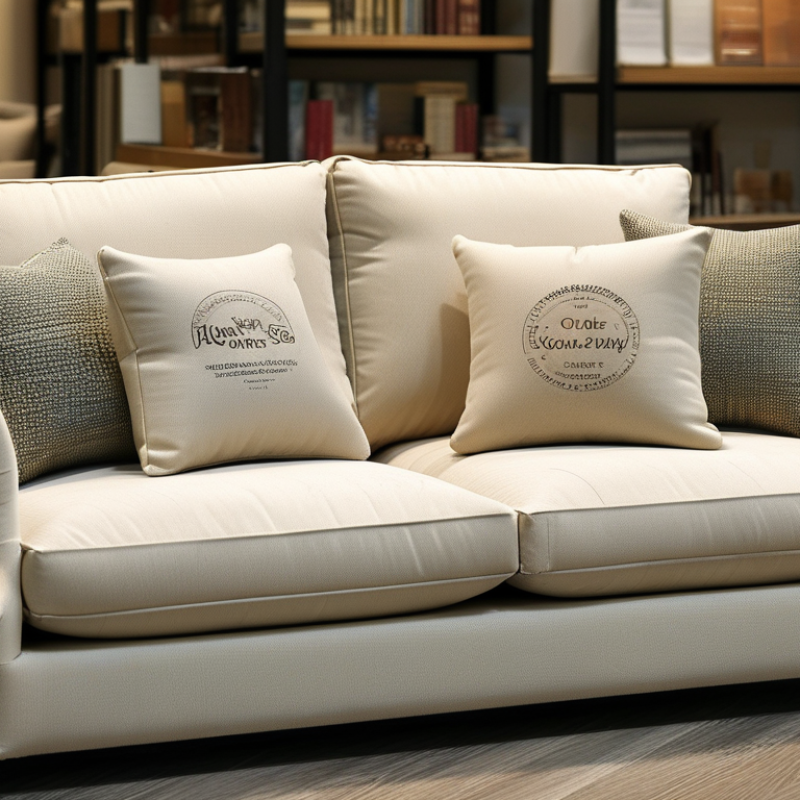
For global buyers, “cloud couch” describes a deep, modular sofa built for relaxed, sink-in comfort. It usually combines wide cushions, a low profile, soft upholstery, and flexible sections. Feather-blend filling feels luxurious, while high-resilience foam offers better shape retention. The category is useful, but not perfectly defined.
Grand View Research
valued the global home furniture market at US$516.66 billion in 2022. It forecasts a 5.2% compound annual growth rate through 2030. CSIL’s World Furniture Outlook also places worldwide furniture consumption above US$700 billion. These figures show why comfort-led furniture attracts international attention.
Online room tours make a large, pale sofa look calm and adaptable. Yet screen appeal can hide practical problems. White fabric meets dust, children, pets, and frequent cleaning.
Professional sourcing should examine construction before appearance. Ask for cushion density, fabric abrasion results, seam photos, frame materials, and replacement-cover options. A 50,000-rub cycle performance rating may suit heavy household use, but testing methods differ. Confirm the standard used. Deep modules can also create shipping challenges, especially in older apartments or narrow elevators. Measure doorways, stair turns, and packaging dimensions. Buyers in humid regions should question moisture resistance and removable-cover drying time. I would not treat softness as proof of quality. A carefully sourced cloud couch should balance comfort, repairability, dimensional accuracy, and transparent test documentation.

Reliable cloud couch sourcing begins with factory verification, not attractive photographs. A capable manufacturer should provide its legal registration, production address, export history, and recent customer references. Request a live video tour of the cutting, sewing, filling, and final inspection areas. Empty showrooms are warning signs.
The product itself needs measurable specifications. Ask for foam density, seat firmness, fabric abrasion results, frame materials, stitching details, and packaging dimensions. Independent laboratory reports should support these claims. ISO 9001 certification can indicate controlled processes, but it does not guarantee a comfortable sofa. Samples matter more. Sit on one for several hours, inspect the seams, and check whether cushions recover after compression. The 2024 Furniture Industry Research Association guidance highlights durability and testing as key purchasing considerations for upholstered furniture.
Logistics deserve equal attention. UNCTAD’s Review of Maritime Transport reports that ships carry over 80% of global merchandise trade by volume. Therefore, confirm container loading plans, moisture protection, carton strength, and delivery responsibilities under the chosen trade terms. Ask suppliers how they handle damaged cartons and replacement parts. Their answer reveals operational maturity.
No supplier is perfect. A factory that documents one failed inspection may be more trustworthy than one claiming zero defects. However, I would still require a pre-shipment inspection before releasing the balance. Cloud couches are large, soft, and easy to photograph well. They are harder to manufacture consistently. EIF
When sourcing a cloud-style sofa internationally, begin with its filling, not its appearance. In factory reviews, I compare foam density, feather content, and fiber layering. High-resilience foam supports daily use, while feather blends create a softer, relaxed seat. Feather-only cushions may look luxurious but need frequent reshaping. Ask for density figures and a physical upholstery sample. Fabric performance also matters. A tightly woven polyester blend can resist stains better than loose linen. Leather changes the price, weight, and maintenance requirements. Request a cutaway sample. Very useful.
Measure the room, doorways, elevators, and packaging space before choosing a size. A 90-inch sofa may suit a large room but fail at the entrance. Modular sections usually simplify delivery and future replacement. Prices often range from about 900 to 2,500 US dollars for standard configurations. Premium fillings, leather, and reinforced frames can raise prices above 4,000 dollars. Compare landed cost, not only the factory quote. Include packaging, freight, insurance, taxes, and local delivery. Ask whether the quotation uses EXW, FOB, or another shipping term.
Customization may cover seat depth, arm width, leg finish, fabric color, and sectional direction. Confirm minimum order quantities and production lead times in writing. Require drawings with measurements and acceptable tolerances. A pre-production sample can reveal problems early. I once trusted digital color images too quickly; the actual fabric looked colder and thinner. That mistake still influences my sourcing process. Good suppliers provide material data, inspection photos, and clear replacement procedures. Check those details before sending a deposit.
Sourcing a cloud couch for global buyers requires more than attractive photos and a low quotation. Verify the frame, foam density, fabric composition, and stitching details. Ask for recent laboratory reports, not scanned documents with unclear dates. Certification names vary by destination market, so match each document with the importing country’s requirements. Check the testing laboratory’s accreditation and contact details. A certificate can look convincing and still be irrelevant. Request batch numbers, product codes, and clear links to the tested materials.
Quality becomes easier to judge through physical evidence. Ask for a sample cushion, fabric swatch, and frame photographs before placing a large order. Measure seat depth, cushion recovery, seam alignment, and carton protection. Foam should recover evenly after compression. Fabric should resist loose threads and visible color shifts. My own preferred check is simple: sit, press, and inspect the underside. Softness sells the couch, but hidden weakness creates returns. One detail may be missed.
Supplier credibility needs independent verification. Review the registered company name, production address, export history, and factory ownership. Confirm whether the supplier manufactures furniture or only brokers it. Arrange a live video walkthrough, then compare the facility with the shipping documents. Use a third-party inspection before final payment, especially for the first shipment. Ask how defects are recorded and corrected. A polished showroom proves little. Even experienced buyers can overlook inconsistent foam grades or substituted fabric. Leave written tolerances for color, dimensions, and stitching, because vague promises become difficult disputes.
How to Source The Cloud Couch for Global Buyers?
Planning International Shipping, Customs, and After-Sales Support
A cloud couch needs more than attractive fabric and soft cushions. Its deep frame creates unusual shipping volume, especially after protective packaging. The UNCTAD Review of Maritime Transport 2024 reports that ships carry over 80% of global merchandise trade by volume. However, bulky furniture still needs careful container planning. Measure twice. Confirm carton dimensions, stack limits, gross weight, and moisture protection before production.
Ask the supplier for the correct HS classification and manufacturing origin documents. Duties depend on the destination country, product materials, and declared customs value. Do not guess. The World Bank’s Logistics Performance Index 2023 assessed 139 economies and highlighted customs efficiency and delivery reliability as major logistics factors. A landed-cost worksheet should include freight, insurance, port charges, brokerage, duties, taxes, and possible storage fees. Incoterms must match the buyer’s actual import capability.
After-sales support should begin before dispatch. Require photos of each carton, serial references, assembly instructions, and a damage-reporting process. Replacement covers, legs, connectors, and cushion inserts should have clear lead times. A 48-hour reporting window may be practical, but local consumer rules can differ. The WTO’s World Trade Outlook and Statistics 2024 projected merchandise trade growth of 2.6% in 2024, showing why cross-border demand remains active. Yet forecasts are not guarantees. Port congestion, fabric variation, or missed documents can still disrupt delivery. Keep written records. That matters.
| Planning Dimension | Practical Requirement | Typical Data or Benchmark | Global-Buyer Action |
|---|---|---|---|
| Product specification | Confirm dimensions, modular configuration, upholstery, cushion fill, frame material, and total packed volume before ordering. | A modular sectional is normally shipped in multiple cartons; the final carton count and cubic volume depend on the selected configuration. | Request a signed commercial specification sheet and packing list with carton dimensions and gross weights. |
| Room and access check | Measure doorways, lifts, stairwells, corridors, turns, and the final installation area. | Many residential delivery failures occur because the largest packed carton cannot pass through the narrowest access point. | Use the largest packed-carton dimensions rather than the assembled sofa dimensions for access planning. |
| Supplier verification | Evaluate production capability, material traceability, export experience, inspection procedures, and written warranty terms. | A factory audit, sample approval, and pre-shipment inspection provide stronger evidence than product photographs alone. | Approve a reference sample and define acceptable tolerances for color, stitching, dimensions, and surface appearance. |
| Shipping mode | Select ocean freight, air freight, or a multimodal service according to budget, urgency, and shipment size. | Ocean freight is generally more economical for bulky furniture; air freight is faster but has a higher chargeable-weight cost. | Compare total landed cost, not only the factory price or freight quote. |
| Transit planning | Allow time for production, export clearance, main carriage, import clearance, and final delivery. | International ocean shipments commonly require several weeks door-to-door, while exact timing varies by origin, destination, route, season, and port conditions. | Build a schedule buffer for port congestion, inspections, public holidays, and last-mile appointment delays. |
| Freight packaging | Protect upholstery and structural parts against compression, moisture, abrasion, and handling impact. | Suitable packaging may include reinforced cartons, corner protection, moisture barriers, internal cushioning, and clearly matched component labels. | Require packaging photographs and a packing-drop or handling review for high-value shipments. |
| Commercial documents | Prepare the commercial invoice, packing list, transport document, purchase order, and any required certificates. | The invoice should state product descriptions, quantities, transaction value, currency, seller, buyer, origin, and agreed delivery term. | Make sure all documents use consistent descriptions, quantities, weights, values, and carton numbers. |
| HS classification | Classify the furniture according to its construction, principal material, and importing country’s tariff schedule. | Furniture classifications can differ by product design and national tariff interpretation; the importing customs authority has final jurisdiction. | Obtain an advance tariff ruling or confirmation from a licensed customs broker when classification is uncertain. |
| Duties and taxes | Budget for import duty, value-added tax or sales tax, customs fees, brokerage, terminal charges, and delivery-related fees. | Rates and taxable bases vary by destination, product classification, customs value, origin, and applicable trade agreements. | Ask a local customs broker for a destination-specific landed-cost estimate before payment. |
| Incoterms and liability | Define who arranges transport, insurance, import clearance, duties, and final delivery. | Incoterms allocate certain costs and risks but do not replace the sales contract, insurance policy, or customs requirements. | State the selected Incoterms rule, named place, insurance responsibility, and customs broker responsibility in writing. |
| Cargo insurance | Cover physical loss or damage during international transport and clarify exclusions. | Carrier liability may be limited and may not equal the full commercial value of the furniture. | Check the insured value, deductible, claim deadline, packaging requirements, and evidence needed for a claim. |
| Delivery and installation | Decide whether delivery is curbside, threshold, room-of-choice, or includes assembly and packaging removal. | Large upholstered furniture often requires a scheduled delivery appointment and may need two or more handlers. | Confirm access conditions, handling equipment, labor requirements, and damage-reporting procedures before dispatch. |
| Arrival inspection | Inspect cartons and components before signing final delivery acceptance. | Photographs of labels, exterior damage, internal packaging, and the affected product provide useful evidence for transport claims. | Record exceptions on the delivery receipt and notify the seller, carrier, and insurer promptly. |
| Warranty coverage | Define coverage for frame, springs, filling, upholstery, stitching, mechanisms, and workmanship. | Warranty duration, exclusions, remedies, and geographic validity are contract-specific and must be confirmed before purchase. | Obtain a written warranty that explains whether repair, replacement parts, replacement units, or refunds are available. |
| After-sales response | Create a documented process for reporting defects, transit damage, missing parts, and assembly problems. | A complete case file should include the order number, carton label, photographs, video where relevant, delivery date, and problem description. | Agree on response times, escalation contacts, replacement-part availability, and responsibility for return freight. |
| Replacement parts | Confirm the availability of covers, legs, connectors, fasteners, cushion inserts, and other service components. | Modular furniture is easier to service when individual components can be identified and replaced separately. | Keep spare components, assembly instructions, fabric information, and product photographs in a service file. |
| Landed-cost control | Calculate product price, packing, inland transport, international freight, insurance, duties, taxes, brokerage, storage, and final-mile delivery. | The final delivered cost can be materially higher than the factory quotation when furniture is bulky or requires special handling. | Use a landed-cost worksheet and obtain written quotations that identify included and excluded charges. |
Note: Customs classification, duty rates, taxes, documentation, delivery services, and warranty conditions vary by origin, destination, product construction, and contract terms. Confirm destination-specific requirements with a licensed customs broker and the relevant customs authority before shipment.