China Top Fluffy Couch Suppliers for Global Buyers?
China has become a major sourcing base for upholstered furniture, including the increasingly popular Fluffy Couch. Its supplier network combines large factories, specialized workshops, and export-focused manufacturers. Buyers can therefore compare materials, production capacity, customization, and shipment experience in one market.
Industry data supports this opportunity. CSIL’s World Furniture Outlook 2024 describes China as one of the world’s leading furniture producers and exporters. Grand View Research’s Upholstered Furniture Market Size, Share & Trends Analysis Report also identifies steady demand growth for upholstered seating. These reports indicate strong market potential, but they do not verify every supplier’s quality. That distinction matters.
A reliable sourcing process should examine fabric density, foam resilience, frame construction, stitching, packaging, and replacement policies. Ask for recent factory photographs. Request sample testing before placing a large order. A soft showroom sofa may hide weak support underneath. Small details matter. Check whether the Fluffy Couch keeps its shape after repeated compression and whether the fabric resists pilling under practical use.
Professional buyers should also review audited business information, export records, production lead times, and applicable product-safety documentation. Independent inspections from recognized testing providers can reduce avoidable risks, although inspection is not a complete guarantee. Supplier claims require evidence. This guide explores China’s top Fluffy Couch suppliers through a practical, evidence-based lens, focusing on manufacturing experience, customization, quality control, communication, and global delivery capability. Some supplier rankings may change quickly. Markets are not perfectly predictable, and even experienced buyers must verify current information before signing contracts.
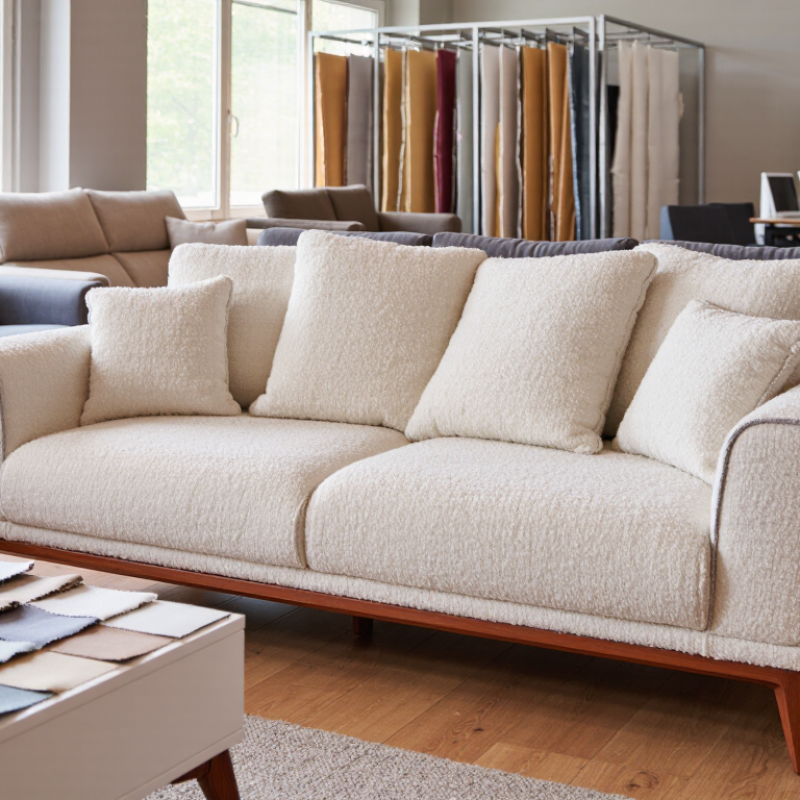
What Defines a Top Fluffy Couch Supplier in China
China Top Fluffy Couch Suppliers for Global Buyers?
What Defines a Top Fluffy Couch Supplier in China
A top fluffy couch supplier combines comfort, construction skill, and dependable communication. Buyers should inspect the frame material, foam density, spring support, and fabric recovery. A sofa may look soft in photos, yet feel flat after several weeks. Request a physical sample before placing a large order.
Experienced suppliers can explain how cushions are filled and tested. High-resilience foam usually keeps its shape better than low-density filling. Removable covers should have even stitching, smooth zippers, and washable fabric labels. Check the corner joints, underside fabric, and leg attachment points. Small details matter.
Factory experience is also visible in production records and quality procedures. Reliable teams provide clear drawings, sample approvals, packing photos, and inspection reports. They should identify material changes before production, not after shipment. Export knowledge includes carton protection, moisture control, and documents for the destination market.
Still, no supplier is perfect. Color differences can appear between samples and bulk goods. Even skilled factories may miss a loose thread. That is why third-party inspection and written acceptance standards remain useful. A serious supplier welcomes reasonable checks, answers technical questions directly, and accepts responsibility when a problem is proven.
Key Manufacturing Regions and Supplier Types
China’s fluffy couch production is concentrated in several practical manufacturing regions. Zhejiang is known for upholstered furniture clusters, flexible fabric sourcing, and small-batch development. Guangdong often serves export buyers needing varied designs, stronger finishing, and coordinated logistics. Jiangsu and Shandong also support sofa production, especially for larger orders and standardized collections.
Supplier types differ more than many buyers expect. Integrated factories usually control frame building, foam cutting, sewing, and final assembly. They can offer better consistency when specifications are clear. OEM and ODM suppliers help buyers adjust dimensions, fabrics, colors, and packaging. Trading companies may provide wider choices, but production control can be less direct. Smaller upholstery workshops sometimes deliver impressive craftsmanship, though their capacity may change during peak seasons.
A reliable evaluation should examine the workshop, not only the quotation. Check kiln-dried wood or metal frame details, foam density, seam alignment, fabric abrasion data, and carton protection. Request a production sample before approving bulk manufacturing. Ask how defects are recorded and corrected. Photos can help, but they cannot replace a physical inspection. Regional labels are not guarantees. A low price may hide thinner foam or weaker internal supports. I have seen attractive samples fail during repeated seating tests. That mistake is costly. Buyers should also confirm lead times, spare fabric, replacement parts, and communication procedures in writing. No checklist is perfect. Real conditions still reveal surprises.
How Chinese Fluffy Couch Suppliers Manage Design and Production
Chinese fluffy couch suppliers often connect design teams with production workshops in one coordinated workflow. Designers study apartment sizes, color preferences, and fabric trends in different export markets. They then prepare sketches, CAD drawings, material boards, and comfort targets.
Production usually begins with a sample couch. The team checks frame strength, foam density, seam alignment, and fabric recovery. A proper supplier records these details in a specification sheet. This document helps buyers compare samples and repeat approved designs. Factory engineers may adjust filling volume or internal support after testing. Small changes can affect softness, shipping size, and long-term shape.
A sample is not always proof of final quality. Fabric batches may vary, and compressed packaging can change the couch’s appearance. That needs honest discussion. Buyers should request material samples, inspection photos, and test records before mass production. Independent inspections can also verify dimensions, stitching, odor control, and carton protection. Some suppliers improve quickly, while others need closer supervision.
Tips: Ask for a complete prototype before placing a large order. Confirm foam density, fabric composition, frame materials, and acceptable measurement tolerances. Keep written approval records for every change. Use clear photos and short videos during production checks. This reduces confusion across languages and time zones.
Quality, Safety, and Export Standards for Global Buyers
China’s top fluffy couch suppliers should prove quality before discussing price. For global buyers, a soft silhouette must still hide a stable frame, even foam recovery, secure stitching, and tested upholstery. I would request a production sample, not only showroom photos. Check joint movement, fabric abrasion, cushion compression, and carton protection. A perfect sample does not guarantee a perfect shipment. That assumption deserves skepticism.
Safety documents must match the destination market. EN 12520 covers strength, durability, and safety for domestic seating. Buyers should also review applicable flammability rules, chemical restrictions, and formaldehyde limits. EU REACH compliance needs current test evidence, not a generic certificate. The EU Safety Gate 2023 report recorded 3,412 alerts for dangerous non-food products. That figure shows why traceable testing matters. Ask for laboratory reports with product codes, test dates, and material details. Verify that the report describes the exact couch construction.
Tips: Confirm foam density, fabric composition, edge protection, and carton drop-test results. Request random pre-shipment inspections. Keep approved samples and signed specifications. The World Bank’s 2023 Logistics Performance Index assessed 139 economies across six logistics dimensions. Export reliability depends on documents, customs accuracy, and shipment tracking, not just factory capacity. Include packing lists, commercial invoices, origin details, and test files. Minor errors can delay clearance. I have seen suppliers treat certificates as paperwork only. That is a costly habit. Quality control must continue until the container is sealed.
How to Evaluate, Compare, and Choose the Right Supplier
China’s fluffy couch market offers many choices, but attractive photos prove little. Compare suppliers through samples, factory records, and measurable specifications. The World Bank’s 2023 Logistics Performance Index gave China a score of 3.7, ranking it 19th globally. That supports efficient export planning, but not automatic product quality.
Request a full sample before negotiating volume. Check seat foam density, rebound speed, stitching, zipper strength, and fabric abrasion results. Ask for the Martindale test rating and the test laboratory’s report. Confirm frame materials, moisture control, packaging dimensions, and carton drop-test results. UN Comtrade data can help compare China’s furniture export performance across target markets and product codes. However, trade data cannot reveal hidden defects. That is where many comparisons fail. A low quotation may reflect thinner foam, weaker fabric, or limited after-sales support.
Tips: Score each supplier across quality, lead time, communication, compliance, and total landed cost. Use the same checklist for every factory. Ask for production photos with visible dates. Verify certificates independently. Request a replacement policy in writing. Do not judge softness from a showroom sample alone. A sofa can feel luxurious for ten minutes and flatten within months. Also inspect compressed packaging carefully; oversized cushions may recover unevenly. UNEP’s Global Resources Outlook 2024 warns that global resource extraction could rise sharply by 2060, so buyers should question material durability and repair options.
How to Evaluate China-Based Fluffy Couch Suppliers
A practical procurement framework for global buyers. The weights represent the relative importance of each due-diligence area when comparing suppliers; they are not company or brand data.
Product quality and material safety receive the highest priority because upholstery durability, foam performance, fabric composition, and formaldehyde compliance directly affect customer satisfaction and market access. Buyers should validate factory capacity, certifications, production consistency, minimum order quantities, and logistics performance before placing an order.